
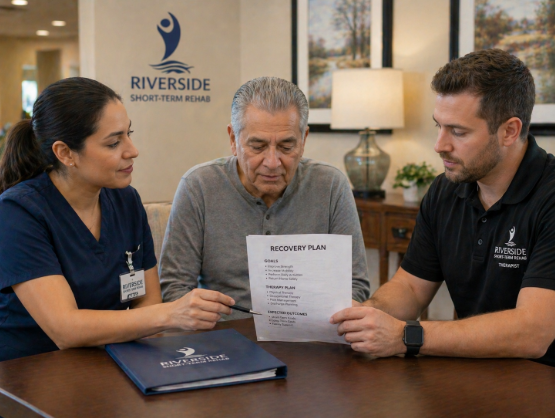
Short-term rehabilitation after surgery is a structured recovery program delivered inside a skilled nursing facility, typically lasting 20 to 100 days. It combines physical therapy, occupational therapy, and skilled nursing care to help your loved one regain strength, mobility, and independence before returning home. For many families in Riverside, this is the bridge between the hospital and a safe discharge home.
The discharge call from the hospital can feel sudden. One day, your loved one is recovering in a hospital bed, and the next, a case manager is asking whether they’re going home or transferring to a rehab facility. Most families haven’t had time to research the difference. This page walks through exactly what happens during a short-term rehab stay, what the therapy schedule looks like day to day, and what Medicare will and won’t cover.
Why Surgery Often Requires More Than Hospital Recovery
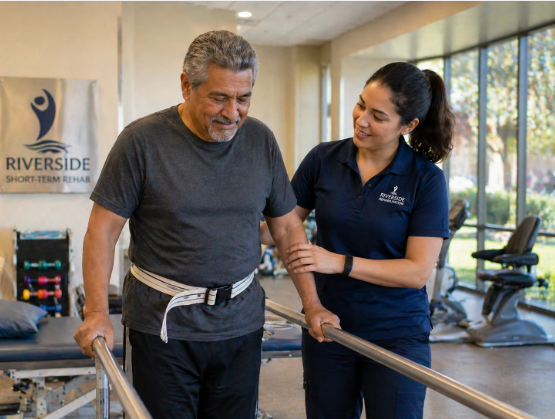 Hospitals are designed for acute medical stabilization, not functional recovery. Once your loved one is medically stable, the goal shifts from treating the condition to rebuilding the capacity to live independently. That shift requires a different kind of care environment.
After major joint replacements, cardiac procedures, or neurological events like stroke, the body needs weeks of consistent, structured therapy to rebuild. According to the Centers for Medicare and Medicaid Services, approximately 1.4 million Medicare beneficiaries receive post-acute care in skilled nursing facilities each year following hospitalization. The clinical and functional gains made during that window directly determine how much independence your loved one recovers long-term.
A skilled nursing facility provides 24-hour nursing supervision alongside daily therapy sessions. That combination is difficult to replicate at home, particularly in the first weeks following surgery when pain management, wound care, and medication management are still active needs.
What the Daily Schedule Actually Looks Like
Most residents are surprised by how structured and active a short-term rehab stay is. This is not bed rest. The goal is purposeful, progressive activity from the first full day.
A typical day includes:
- One to two hours of physical therapy focused on mobility, strength, balance, and safe ambulation with or without assistive devices
- One hour of occupational therapy addressing activities of daily living, including bathing, dressing, and preparing meals
- Speech therapy if swallowing, communication, or cognitive function was affected by the procedure or underlying condition
- Nursing assessments, wound care, and medication management are woven throughout the day
- Rest periods are scheduled between sessions to allow the body to consolidate progress
Therapy intensity is calibrated to your loved one’s current capacity and adjusted as they progress. The first week often focuses on foundational goals: getting out of bed safely, standing without assistance, and managing transfers. By the third and fourth week, most residents are practicing stair navigation, outdoor walking, and home simulation exercises designed for their specific discharge environment.
Common Procedures That Lead to Short-Term Rehab
Certain surgeries and medical events consistently require a skilled nursing stay for safe recovery. These include:
- Total knee replacement and total hip replacement
- Cardiac surgery, including open-heart procedures and valve replacements
- Spinal surgery with residual mobility limitations
- Stroke, even when the neurological event is mild
- Severe fractures, particularly hip fractures in older adults
- Major abdominal procedures where wound management and early mobility supervision are required
- Amputation and limb salvage procedures require prosthetic training
The decision to transfer to a skilled nursing facility rather than discharge home is made jointly by the hospital care team, the attending physician, and the family. Your loved one’s functional status at discharge, home environment, and available caregiver support all factor into that recommendation.
How Long Does a Short-Term Rehab Stay Last?
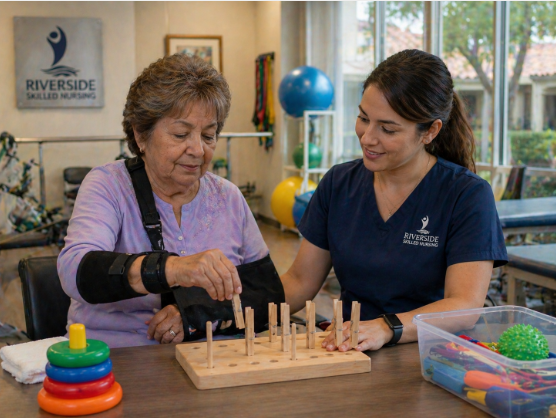 Most short-term rehab stays run between two and six weeks. The actual duration depends on the procedure, your loved one’s pre-surgery baseline, how quickly they progress through therapy milestones, and what their discharge home requires.
A joint replacement in a previously active adult with a supportive home environment may resolve in 14 to 21 days. A hip fracture in an older adult with moderate baseline limitations and a home that requires stair navigation may take 40 to 60 days. Neither number is a judgment on recovery speed. They reflect the complexity of getting someone truly ready to live safely at home.
The therapy team sets measurable discharge criteria from the start of the stay. Progress toward those criteria is documented and reviewed with the family at regular care conferences. When your loved one meets those benchmarks, the team begins coordinating the home discharge plan, which typically includes home health referrals, durable medical equipment, and a follow-up care schedule.
Medicare Coverage for Short-Term Rehab After Surgery
Medicare Part A covers short-term skilled nursing facility care following a qualifying hospital stay of at least three consecutive days. This is one of the most important things families need to understand before a discharge decision is made.
Coverage works on a benefit period structure. For days 1 through 20, Medicare covers the full cost with no coinsurance. From day 21 through day 100, a daily coinsurance applies. As of 2025, that coinsurance amount is $204.00 per day, typically covered by a Medicare supplement plan if your loved one carries one. After day 100, Medicare coverage ends for that benefit period.
To qualify for Medicare Part A coverage, the skilled nursing stay must follow a three-day hospital admission. Observation status does not count, even if your loved one spent several nights in the hospital. This distinction matters significantly. Families who learn their loved one was held under observation status rather than admitted as an inpatient sometimes face unexpected out-of-pocket costs. The Medicare Rights Center recommends asking the hospital directly whether admission status is inpatient or observation before discharge planning begins.
Medi-Cal covers skilled nursing facility care for residents who qualify based on income and asset limits. Medi-Cal does not require a prior hospital stay and does not use the same benefit period structure as Medicare. Coverage is ongoing as long as the resident meets medical necessity criteria. A facility admissions coordinator can walk your family through eligibility requirements for either program.
What to Ask Before Choosing a Short-Term Rehab Facility
Not all skilled nursing facilities offer the same rehabilitation program. Staffing ratios, therapy hours per day, and the equipment available in the therapy gym vary meaningfully between facilities. These questions will help your family evaluate options clearly.
- How many therapy hours per day does a typical resident receive?
- Is therapy provided seven days a week or five?
- What is the ratio of licensed therapists to residents in the rehab program?
- Does the facility have a dedicated therapy gym, or are sessions conducted in the resident’s room?
- How are family members kept informed about progress and discharge planning?
- What happens if my loved one needs a longer stay than originally projected?
- Does the facility accept Medicare, Medi-Cal, and my loved one’s supplemental plan?
Proximity matters more than most families expect. Facilities closer to home allow family members to visit more frequently, which has a documented positive effect on motivation and recovery outcomes. If your loved one is being discharged from a hospital in Riverside or the surrounding area, choosing a local short-term rehab facility means shorter travel time for visits and easier coordination with their existing outpatient care team once they return home.
For a deeper look at the full spectrum of rehab and recovery services available, the short-term rehabilitation program at Community Care on Palm covers what each phase of a stay involves and who it’s designed to help.
What Families Should Prepare Before the Stay Begins
The transition from hospital to rehab facility moves quickly. Having a few things ready before the transfer helps your loved one settle in and allows the care team to start therapy without delay.
- A current medication list, including dosages and prescribing physicians
- Insurance cards for Medicare, Medi-Cal, and any supplemental plans
- A list of your loved one’s physicians and specialists with contact information
- Comfortable, loose-fitting clothing appropriate for therapy sessions
- Eyeglasses, hearing aids, and any personal mobility equipment they use regularly
- A few familiar items from home, which can reduce anxiety during the adjustment period
Families are encouraged to attend the initial care conference, which typically takes place within the first 72 hours of admission. This meeting establishes therapy goals, sets the discharge target, and gives family members a direct channel to the care team. Staying engaged throughout the stay, not just at admission, is one of the most effective ways to support your loved one’s progress.
How soon after surgery does short-term rehab typically begin?
Most residents begin therapy within 24 to 48 hours of arriving at the skilled nursing facility. The initial session is usually an evaluation rather than a full workout. The therapist assesses baseline strength, mobility, and functional capacity to establish starting goals. Active therapy begins the following day in most cases.
Can my loved one receive visitors during a short-term rehab stay?
Yes. Most skilled nursing facilities encourage family visits, which support emotional well-being and motivation during recovery. Visiting during or just after therapy sessions allows families to observe progress firsthand and ask the therapist questions directly. The admissions team can confirm visiting hours and any current facility guidelines.
What if my loved one isn’t ready to go home when Medicare coverage ends?
Coverage ending does not mean the stay must end. If your loved one continues to require skilled care and therapy, the facility can discuss private pay options, long-term care insurance coverage, or a Medi-Cal assessment if they qualify. The discharge planning team will work with your family well before the coverage window closes to review all available options.
Is short-term rehab in a skilled nursing facility different from inpatient rehab at a hospital?
Yes. Inpatient rehabilitation facilities, sometimes called acute rehab, provide more intensive therapy at three or more hours per day and are designed for residents who can tolerate that level of activity immediately post-surgery. Skilled nursing facility rehab is less intensive and more appropriate when your loved one needs a more gradual recovery pace. The hospital care team will recommend the setting that matches your loved one’s current capacity.
Does Medicare cover the full cost of short-term rehab?
Medicare Part A covers the full cost for days 1 through 20 following a qualifying three-day hospital admission. From day 21 through day 100, a daily coinsurance applies. As of 2025, that amount is $204.00 per day. Many Medicare supplement plans cover this coinsurance. After day 100, Medicare coverage ends for that benefit period. Medi-Cal coverage operates under different rules and does not use this benefit period structure.
Can my loved one refuse therapy during a short-term rehab stay?
Yes, residents have the right to decline therapy sessions. However, consistent refusal of skilled services may affect Medicare coverage eligibility, as coverage requires active participation in skilled nursing or rehabilitation care. The therapy team is trained to work with residents who are anxious, in pain, or hesitant. If your loved one is struggling to engage, speaking with the nursing staff or social worker early can help identify and address the reason.
Community Care on Palm is a skilled nursing and rehabilitation facility located at 4768 Palm Avenue in Riverside, serving families throughout Riverside, Corona, Moreno Valley, Perris, Norco, Jurupa Valley, and Ontario. If your family is navigating a discharge decision and wants to understand whether a short-term rehab stay is the right next step, the team at Community Care On Palm is available to answer your questions. There is no pressure and no obligation. Call (951) 686-9001 to speak with someone directly.
Community Care On Palm
4768 Palm Avenue
Riverside, CA 92501
Phone: (951) 686-9001
Leave a Comment