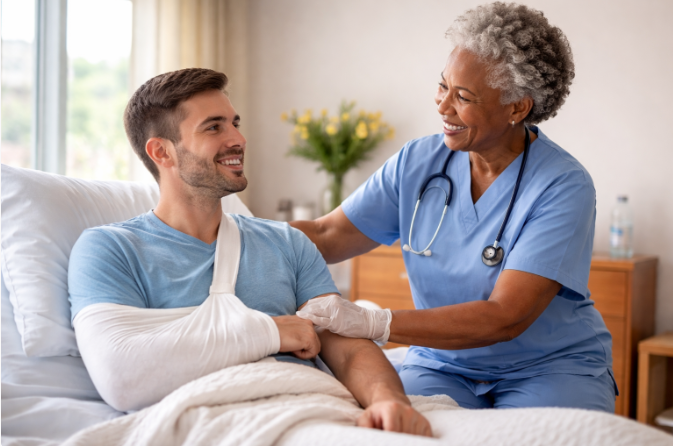
Leaving the hospital does not always mean a person is ready to return home independently. Many patients are medically stable but still require monitoring, rehabilitation, and structured support to prevent setbacks. Post-hospital skilled nursing serves as an intermediate level of care designed to bridge the gap between acute hospitalization and full recovery at home.
In communities such as Corona and Norco, families often seek structured transitional care after surgery, illness, or injury. The goal is not long-term placement, but a focused period of recovery supported by licensed medical professionals.
What Post-Hospital Skilled Nursing Means
Post-hospital skilled nursing refers to short-term, medically supervised care provided after discharge from an acute care hospital. Patients entering this level of care typically still require clinical oversight that cannot safely be managed at home.
This may include daily nursing assessments, wound management, intravenous medications, cardiac monitoring, respiratory support, or assistance in managing complex medication regimens. The care is directed by physicians and carried out by licensed nurses and rehabilitation professionals.
Unlike custodial care, skilled nursing is clinical in nature. It addresses medical needs that require professional judgment and ongoing evaluation rather than simple assistance with daily activities.
Common Medical Situations That Require Transitional Skilled Care
Not every hospital discharge requires skilled nursing, but certain conditions increase the likelihood that additional supervision is necessary. These commonly include joint replacement surgery, stroke recovery, cardiac events, severe infections, and complications related to chronic illness.
Patients recovering from fractures, major abdominal procedures, or respiratory illness may also benefit from structured oversight. In these cases, mobility may be limited, endurance reduced, and risk of complications elevated.
When physicians determine that home discharge presents safety concerns, short-term placement in a skilled setting provides time for stabilization and monitored improvement.
Clinical Oversight During the Early Recovery Phase
The first weeks after hospitalization are often the most medically vulnerable. Medication changes, surgical wounds, fluctuating vital signs, and residual weakness require close observation.
Skilled nursing facilities provide 24-hour licensed nursing coverage. Nurses monitor for early warning signs such as infection, fluid imbalance, uncontrolled pain, or changes in cognition. Prompt recognition of these issues can reduce the likelihood of readmission.
Structured clinical documentation and communication with the attending physician allow for adjustments to care plans as recovery progresses.
Rehabilitation Services as Part of Skilled Nursing Care
Transitional recovery often includes physical therapy, occupational therapy, and sometimes speech therapy. These services are integrated into the daily routine rather than scheduled sporadically.
Physical therapy focuses on rebuilding strength, balance, and mobility. Occupational therapy addresses functional tasks such as dressing, bathing, and transferring safely. Speech therapy may assist with swallowing difficulties or cognitive communication challenges following neurological events.
For individuals exploring post-hospital skilled nursing, understanding how therapy is coordinated alongside medical care is important. Rehabilitation is not separate from nursing oversight; it operates within a comprehensive plan tailored to the patient’s condition and goals.
Medication Management and Risk Reduction
Hospital discharges frequently involve changes to prescriptions. New medications may be introduced while others are discontinued. This transition period carries risk, particularly for older adults managing multiple prescriptions.
Skilled nursing staff review medication orders, administer drugs according to physician directives, and monitor for side effects or interactions. Adjustments can be made promptly if adverse reactions occur.
Structured medication administration reduces the likelihood of dosing errors and improves consistency during a phase when patients may still be fatigued or cognitively vulnerable.
Preventing Hospital Readmissions Through Structured Care
Unplanned readmissions are often linked to inadequate follow-up, unmanaged symptoms, or premature discharge home. Transitional skilled nursing addresses these gaps by maintaining consistent monitoring during the highest-risk period.
Vital signs, laboratory values when indicated, nutritional intake, hydration status, and mobility progression are evaluated regularly. Small clinical changes can be addressed before they escalate into emergencies.
This structured environment does not eliminate all risk, but it provides a level of oversight that significantly differs from unsupervised recovery at home.
Coordination With Physicians and Discharge Planning
Skilled nursing facilities operate under physician supervision. Care plans are reviewed and updated as needed, with communication between nursing staff and medical providers.
Equally important is discharge planning from the skilled setting itself. The objective is a safe return home or transition to the next appropriate level of care. This involves assessing mobility, medication management capacity, caregiver availability, and home safety considerations.
Therapists may recommend equipment such as walkers, shower chairs, or grab bars. Nurses provide education regarding wound care or symptom monitoring. These steps help ensure continuity once the structured environment is no longer in place.
Duration of Stay and What Influences Length of Recovery
The length of a post-hospital skilled nursing stay varies based on diagnosis, baseline health, and rehabilitation progress. 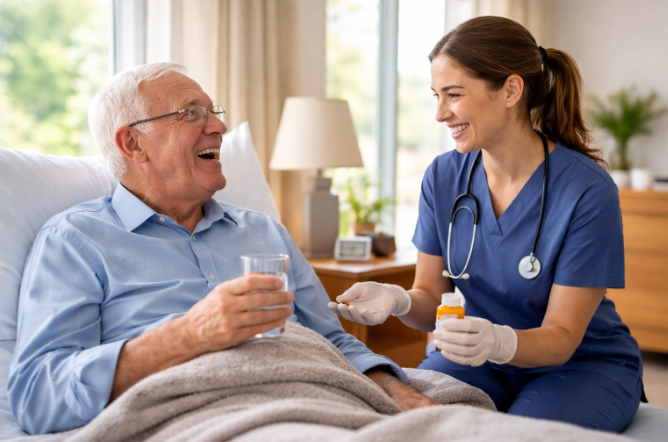 Some patients require only a short period of stabilization, while others may need several weeks of therapy and monitoring.
Progress is typically evaluated through measurable functional benchmarks. Improvements in walking distance, ability to perform daily activities, wound healing, and stable vital signs all influence readiness for discharge.
Insurance coverage and physician recommendations also play a role, but clinical stability remains the central consideration.
Family Involvement and Realistic Expectations
Families often expect rapid improvement after hospital discharge. In practice, recovery can be uneven. Fatigue, temporary setbacks, and gradual strength rebuilding are common.
Skilled nursing environments encourage family participation in care planning discussions. Understanding the patient’s limitations, therapy goals, and projected timeline helps reduce uncertainty.
Clear communication about what the patient can safely do — and what still requires assistance — supports smoother transitions back to home settings in Corona, Norco, and surrounding areas.
How Skilled Nursing Differs From In-Home Care During Transition
In-home care may assist with daily tasks, but it does not typically include continuous licensed nursing supervision. For medically complex cases, the absence of round-the-clock oversight can present safety concerns.
Skilled nursing settings are equipped to respond immediately to changes in condition. Access to medical equipment, trained clinical staff, and coordinated therapy services creates a structured recovery environment that differs from home-based support.
Once medical risk decreases and functional ability improves, patients may safely transition to home care. Determining the appropriate starting point depends on the individual’s condition at discharge, not preference alone.
Leave a Comment